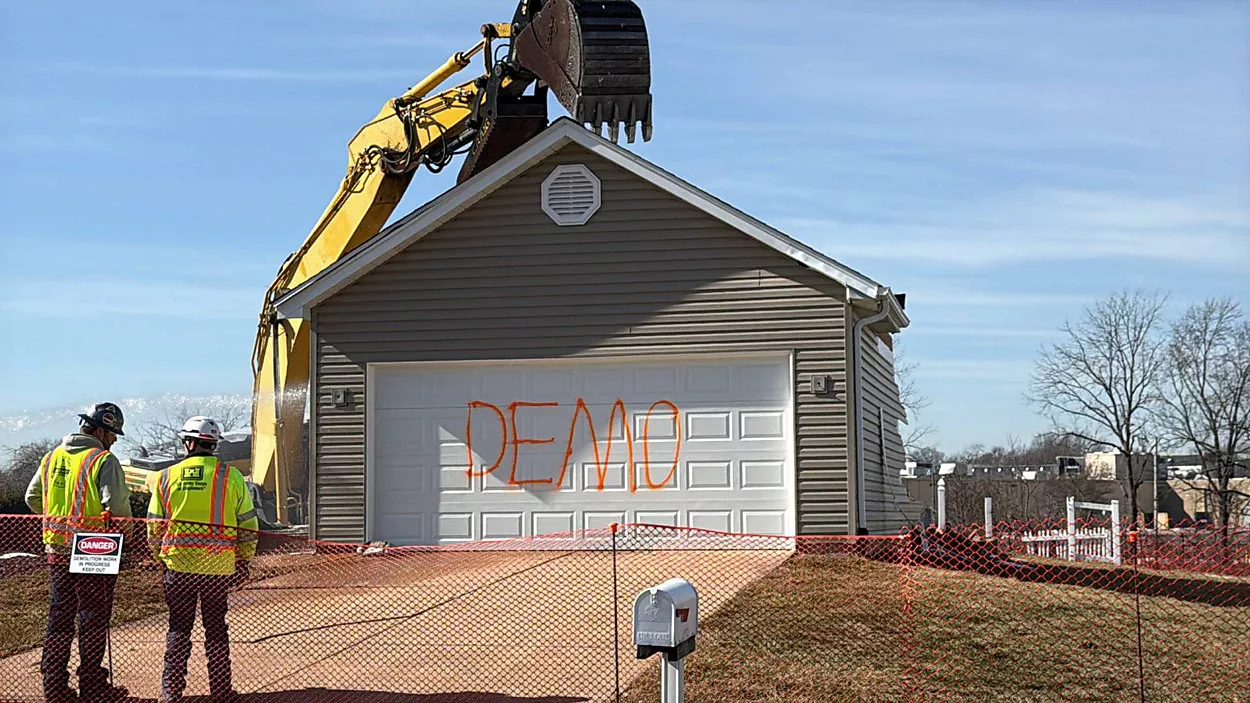
FLORISSANT, Mo.—Gina McNabb’s family has called the 800 block of Cades Cove Drive in Florissant home for 28 years. Not long ago, she refinanced the home to get improvement projects, like new windows, done.
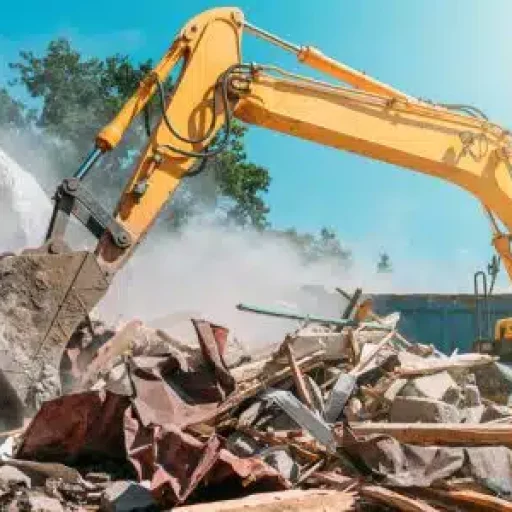
On Monday morning, she watched demolition crews take down her home, one of six that testing conducted by the U.S. Army Corps of Engineers revealed had contaminated soil in the backyards of the properties going up to anywhere between two and a half and 17 feet underneath their foundations.
The homes were built on a meander of Coldwater Creek, which has been plagued by nuclear contamination dating back to the Manhattan Project era.
The demolition marks the first time in the history of the federal program established in 1974 to remediate sites connected to the early days of the nuclear weapons race that residential homes have had to be taken down.
“We’ve collected over 41,000 samples along Coldwater Creek. And although there’s still more spots of contamination that we have to get, the data shows that these are the only homes that we have to demolish right now,” said Lt. Col. Andrew James, Deputy Commander for the St. Louis District for the Army Corps of Engineers. “And for the residents in this area, especially the neighbors that are close and can see this work going on every day, you know, safety is our number one priority.
Federal authorities won’t disclose payouts to the impacted property owners, but McNabb said her home loan was paid off and her moving expenses were covered.
“How do you put a price on 28 years?” McNabb wondered. ”How do you put a price on, you know, my husband’s had cancer, my kids had illnesses, and that’s not to say that it definitely came from this, but now there’s a question.”
People in parts of the St. Louis region with certain cancers are eligible to file claims for medical expenses under a newly-expanded Radiation Exposure Compensation Act, which was signed into law in July. Roughly $40 million has already been paid out to victims or their families in the Manhattan Project area, which includes parts of Missouri, Alaska, Kentucky and Tennessee.
The homes on Cades Cove will be demolished one at a time over the next month. The contaminated soil will be shipped to Utah, with full remediation of the site expected by September, when the properties will be turned back over to the impacted owners.
McNabb said they talk every day. While there is relief that her family is now away from the contamination, she described group feelings of sadness, of being overwhelmed.
Despite that, she could see a path to coming back once the work is done. It will depend on what further testing in the rest of the area looks like, and, possibly, testing her family pays for on its own for peace of mind.
“I probably would hire somebody personally to do my own private testing to make sure that it’s free and clear. Because I don’t trust the government. I’m so sorry. I just don’t, especially after all this,” she said.
Based on known amounts of radiation and existing funding available for remediation, overall work related to Coldwater Creek isn’t expected to be done until the late 2030s.
About the Author