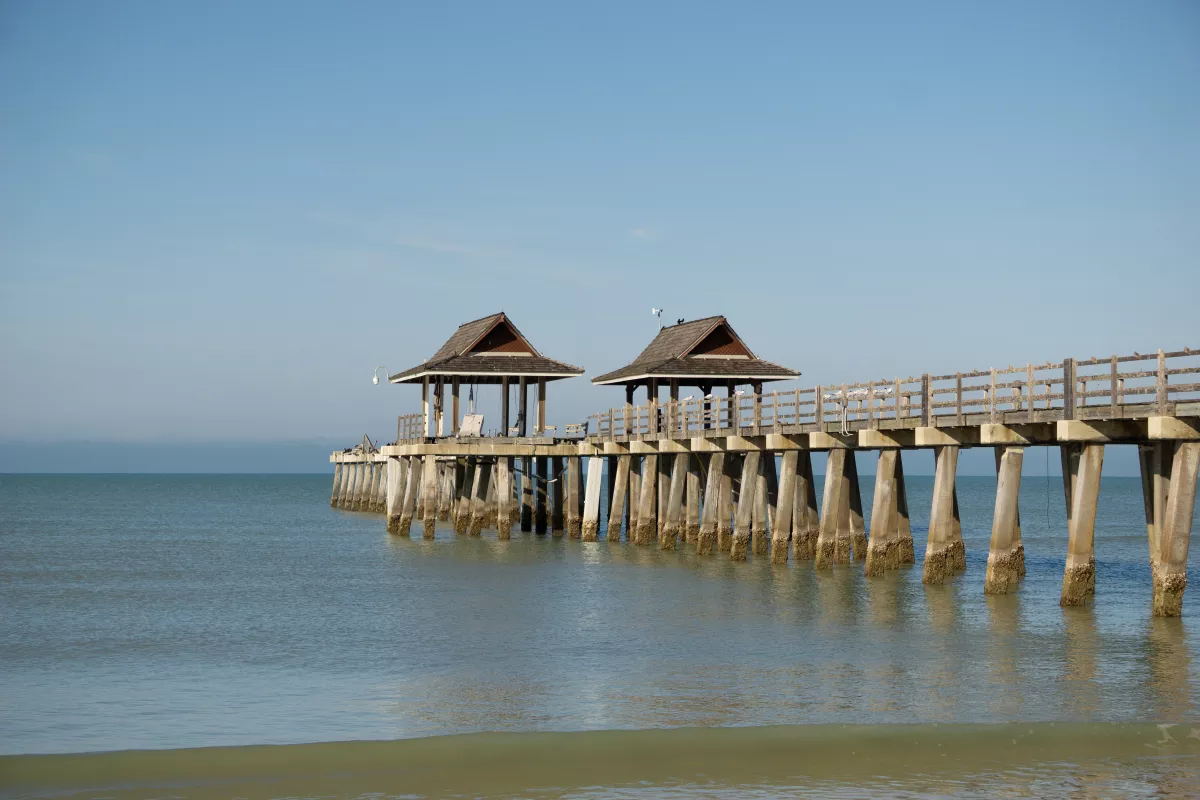
The Naples Pier is an iconic landmark in Naples originally built in 1888. Since then, the pier has been rebuilt after hurricanes in 1910, 1926, 1944, and 1960. In 2015 the pier was reconstructed, and soon after in 2017, Hurricane Irma damaged the structure. Since then, the City of Naples has been working to extend the life of the pilings by installing modern pile jackets. The current pilings have been in place since the 90’s and showing signs of age. Over one million visitors visit the Naples Pier annually. Visitors come to fish, socialize, view wildlife, use the concession, exercise, and a variety of other activities.
In September 2022, Hurricane Ian caused catastrophic damage to the Naples Pier. Approximately 460 feet of the pier was damaged significantly, with about 140 feet of the end sitting at the bottom of the Gulf. The shelter at the end of the pier and over 30+ pilings make up the 140 feet of missing pier. The concession, shelter, and storage structures located at the midpoint of the pier were completely “gutted” by the waves. Additionally, wave energy lifted the framing and decking at the public shower area. The City’s engineers have determined that most of the structural elements of the Pier have been compromised and that the entire structure for safety and resiliency reasons must be replaced.
The new pier structure is based on modern insights and practices meeting the current federal, state, and local standards and criteria for design and construction. The project’s scope of work included a conceptual design process with an analysis of alternatives. The Naples Pier is anticipated to continue to be a landmark structure with unique architectural features that give an iconic flare with more versatility for visitors and avoid potential conflicts with fishing activity.
Steps were taken during the design development process of the replacement structure to minimize the effect of the new pier structure on the adjacent shorelines by reducing the number of piles and increasing the spacing between piles. The City of Naples also created mitigation opportunities with the design and provided an improved structure with more resiliency. This includes increasing the cross-sectional size of the pilings, increasing the concrete support of the IPE wood decking, and raising the elevation of the pier by at least three fee
About the Author